Item | Specifications | |
Elevator basic features | Maximum floors | 64 floors |
| Maximum running speed | 6m/s | |
| Group-control ability | Maximum 8 elevators | |
| Communication mode | 2 sets of CANbus communication ports, 2 sets of Modbus communication ports | |
Technical Performance | Control mode | PG vector control |
| Overload capability | 60s for 150% overcurrent; 10s for 200% overcurrent | |
| Starting torque response | PG vector control:0Hz/150% | |
| Speed control accuracy | PG vector control:±0.1% max speed | |
| Carrier frequency | 1.0kHz~16.0kHz | |
Peripheral interface | Power cable terminals | Control panel 3 phase input R、S、T、(N);L1、L2、L3、(N) |
| Motor power cable input U、V、W | ||
| Signal cable terminals | Machine room security plugin terminals, brake plugin terminals, accompanying cable terminals, hoistway cable terminals, car top lighting power terminals, spare I/O terminals, spare communication terminals | |
| PG card terminal | Encoder cable | |
Features | Operation mode | Normal run, inspection, re-leveling, door-open re-leveling, UPS operation, and hoistway self-learning |
| Stopping method | Distance-based stopping principle, with real-time generation of the travel curve for direct and precise leveling. | |
| Starting torque compensation | Two independent regulation methods using the speed loop and position loop, enabling smooth start without a load weighing device. | |
| Motor auto-tuning | Synchronous motors use load-based rotational auto-tuning, while asynchronous motors use static auto-tuning | |
| Hoistway auto-tuning | Accurately records floor positions and forced deceleration switch positions | |
| Automatic voltage regulation | Maintains constant output voltage automatically when grid voltage fluctuates | |
Operating and monitoring | Control cabinet operating panel (MR) | Equipped with an emergency stop switch, an emergency power switch, and emergency buttons for upward and downward movement |
| Control cabinet operating panel (MRL) | Elevator shaft lighting switch, governor action reset button, electric release button, backup power switch | |
| Operator keypad | Composed of a 5-digit LED display, 8 indicator LEDs, and 5 keys. It supports fault inquiry, call commands, motor auto-tuning, hoistway self-learning, and test operations. For details, refer to Section 8.5. | |
| Handheld operator | Supports parameter setting, parameter upload and download, soft fault inquiry, and manual call operations | |
| APP Easy-Commissioning software | Supports parameter setting, parameter upload and download, fault inquiry, and manual call operations | |
Environment | Environment temperature | The operating environment temperature is between -10°C and +40°C. If it exceeds 40°C, derating is required, and the maximum should not exceed 50°C. For every 1°C rise above 40°C, derate by 4% |
| Environment humidity | Relative humidity of air ≤90%, no condensation | |
| Altitude | The DSC160B elevator control cabinet can operate at its rated power when installed below an altitude of 1000 meters. When the altitude exceeds 1000 meters, the drive's power needs to be derated, with a 1% reduction for every 100 meters of altitude increase, up to a maximum of 4000 meters | |
| Control cabinet working area height | The clear height of the working area in the machine room with the organic control cabinet should not be less than 2.5 m | |
| Work area in front of the control cabinet | For inspection and maintenance, a clear horizontal area of 0.5 m × 0.7 m in front of the cabinet is required | |
| Ingress protection level | IP20 | |
Standard Electrical Specification | Safety Circuit Power Supply Specifications | AC/DC 110V,0.5A |
| System 24V Power Supply Specifications | DC24V,6A | |
| Brake power supply output specifications | DC110V,5A | |
| Speed limiter coil control power specifications | AC220V | |
Popular Searches:

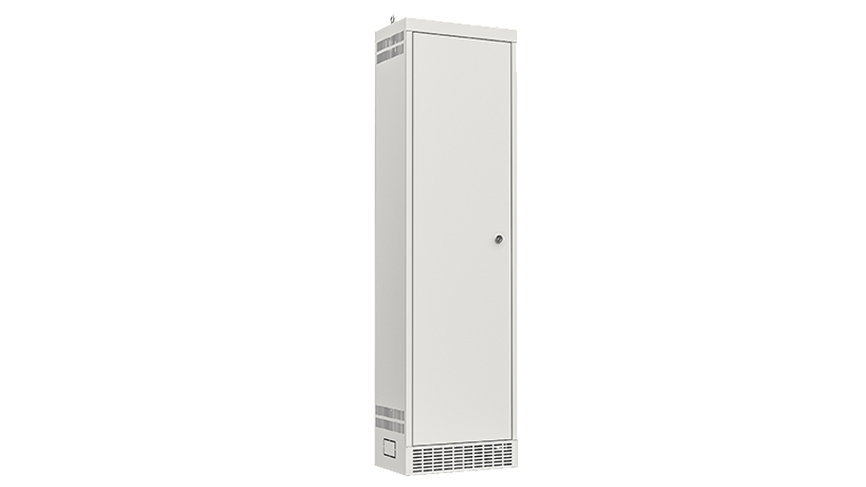
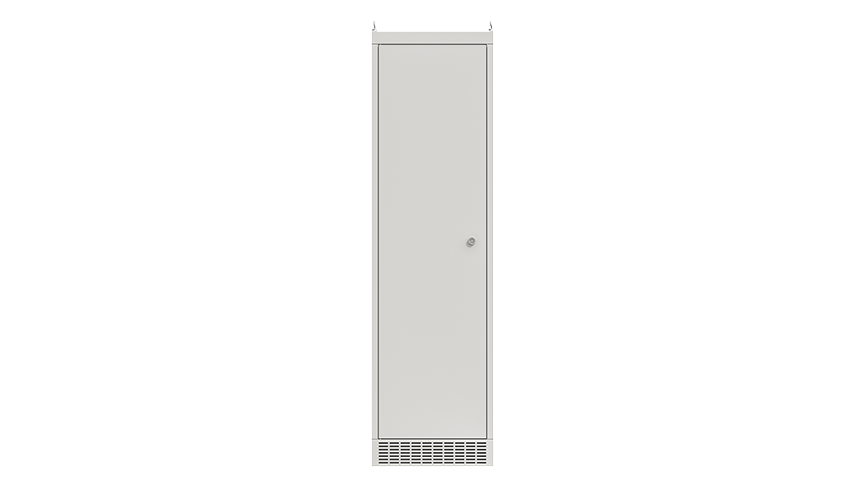
DSC300B Elevator Integrated Control Cabinet
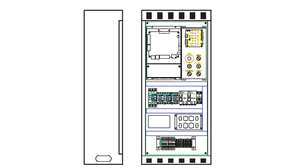
The DSC300B integrated elevator control cabinet, used the EC300B as the main controller, represents our latest line of universal, intelligent, and highly integrated solutions. By combining advanced VFD vector control, smart elevator management, and network communication technologies, it seamlessly unites elevator drive, control, and monitoring functions within a single system—enhancing reliability, usability, cost-effectiveness, and supporting an open-architecture functional design.
·7.5-55kW, MR
·
7.5-30kW, MRL
·
64 Maximum floors


 Images
Overview
Features
Specifications
Downloads
More Resources
Case
Videos
More
Features

Simple and User-Friendly
 Modular assembly design with a main board + interface board architecture, enabling simple wiring and convenient commissioning (supports mobile APP and operator commissioning, including in-car debugging). The modular structure allows easy replacement of control cabinet components, reducing maintenance costs.
01
Compatible and Integrated
Compatible with mainstream market product interfaces, functions, and software commissioning. Supports both RS485 and CAN communication for hall calls and car calls. Compatible with discrete UCMP and electronic UCMP configurations (single-door and double-door), enabling zero-cost component switching.02
Digital and Intelligent
Supports IoT module integration, with APP access to the i-ESM IoT management platform. Features adaptive physical floor recognition for hall call boards, built-in data “black box” function, intelligent brake force detection, and door logic self-learning.03
Quiet and Comfortable
Advanced torque ripple suppression technology, dead-zone compensation technology, current sampling technology, and current loop control technology. Contactors adopt a silent enclosure design, improving ride comfort and reducing machine operating noise.04
Specifications
Have questions or need support?
Our professional team is here to help.


Inquiry
TOP
Popular Searches:
Repair Progress Tracking | Identity Verification
To protect your repair information, please verify using the mobile number reserved on the service order.
Verify with the reserved mobile number
Verify
SMS Verification Code *
If you cannot receive the code, please contact the after-sales hotline. 400-700-9997


Contact INVT
Get in touch with INVT. Our team will get back to you shortly.
Full Name *
Company Name *
Email Address *
Phone Number *
Country *
City
Inquiry Type *
Product Category *
Select the product you're interested in.
-
Industrial Automation
-
Network Power
-
PV & ESS
-
e-Mobility
Your Message / Requirements *
I have read and agree to INVT Privacy Policy and Terms of Use
Captcha *