1. Background
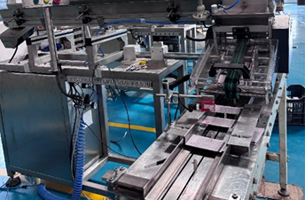
The folding machine is used to process rolled raw paper into strip-type pull-out tissues, also known as a pull-out tissue machine. It is the core equipment for producing pull-out tissues, and its importance is self-evident. The traditional folding machine market has long been dominated by overseas brands. However, with the rapid development of the market and continuous advancements in folding machine technology, the demands of domestic enterprises for folding machines have significantly changed. Today, companies not only pursue higher production capacity and more flexible processes but also place greater emphasis on cost control. Against this backdrop, the Invt system solution has emerged, offering a high-quality localized solution to meet the comprehensive needs of enterprises for folding machines.
2. Customer issues
Insufficient Production Capacity: The current production speed of the customer's folding machine cannot be increased. A full servo solution is required to enhance the cycle time and gain competitiveness.
Poor Process Flexibility: Traditional folding machines involve complex operations when adjusting process parameters, making it difficult to adapt to the production of tissues with different specifications and materials.
High Costs: High maintenance costs and energy consumption increase production costs, negatively impacting the competitiveness of enterprises.
To address these issues, the company decided to adopt the Invt system solution to achieve an efficient and intelligent upgrade of the folding machine.
3. Equipment Principle
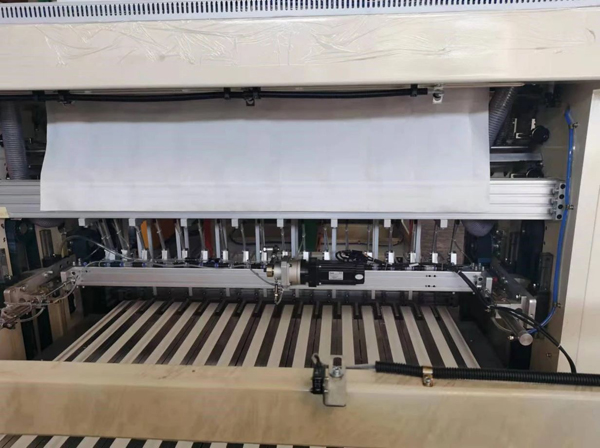
Paper Feeding: The raw paper is delivered to the pressing station near the main unit, divided into front and rear feeding stations, which operate synchronously with the main unit's rollers.
Paper Cutting: The main unit consists of front and rear feeding rollers, each uniformly equipped with 3 cutting edges. Each rotation of the rollers delivers 3 sheets of paper, totaling 6 sheets.
Paper Receiving: First, the front paper separator and front lifting mechanism receive the paper. The synchronization ratio between the front lifting mechanism and the main spindle is adjusted based on thickness conversion.
Tail Folding: The rear paper separator and rear lifting mechanism handle tail folding. The distance between the rear and front insertion points is adjusted according to parameters. During the front lifting mechanism's paper-receiving process, the rear lifting mechanism synchronizes with the front's descending speed to avoid collisions.
Handover: Once the set conditions are met, the transfer platform takes over the paper-receiving task. The synchronization ratio between the transfer platform and the main spindle is calculated based on thickness. Since the transfer platform is located below the rear lifting mechanism, the rear paper separator and rear lifting mechanism retract during the transfer platform's ascent to prevent collisions.
Paper Separation: After the transfer platform receives the paper and reaches the set specifications, the rear paper separator and rear lifting mechanism first insert to separate the paper, followed by the insertion of the front paper separator and front lifting mechanism to receive the paper.
Paper Discharge: While the front paper separator and front lifting mechanism receive the paper, the rear paper separator and rear lifting mechanism follow the transfer platform to place the finished strip-type pull-out tissues onto the conveyor belt.
4. Solution Architecture
* Key Challenges
The mechanical structure limitations of traditional solutions make it impossible to increase speed. The synchronization and positioning solutions involve numerous debugging parameters with weak coupling relationships, resulting in high difficulty and time-consuming debugging.
When producing products of different specifications, the cam parameters vary, leading to different upper limits for the main speed. If the main speed is too fast during the coordinated paper-cutting action of the axes, the actions may fail to synchronize, causing alarms or collisions, which result in downtime and economic losses for the customer.
* Solution Approach
Modify the mechanical structure and adopt a servo electronic cam control method. Optimize the calculation method to reduce parameter configuration, requiring only the debugging of a few cam points to complete the setup.
When producing products of different specifications with corresponding cam parameters, the upper limit of the main speed varies. To ensure all axes can synchronize during the paper-cutting action, the program calculates the cycle of all actions to determine the maximum main speed and limits it, thereby reducing alarms and downtime.
* System Architecture
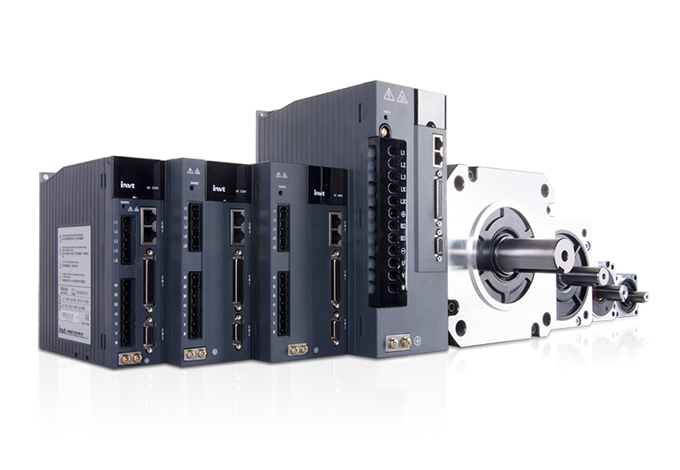
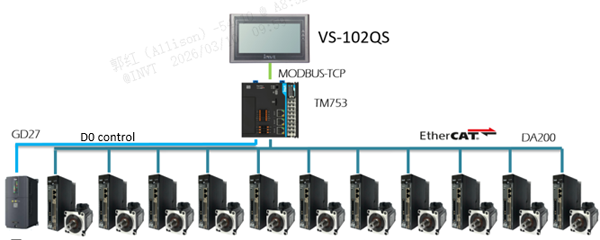
The Invt system solution utilizes advanced TM753 motion control controllers, DA200 EtherCAT bus servo drives, and VS-102QS touch screens. Through electronic cam functionality and multi-axis composite synchronization, it achieves high-speed folding, paper separation, and tail folding.
5. Customer Benefits
Efficiency and Profitability: The maximum processing efficiency reaches 120 meters per minute or 20 strips per minute, increasing production efficiency by 20%. This reduces unit costs and enhances competitiveness.
Quality Improvement: The cam process ensures smoother action coordination, eliminating issues like floating or missing paper. Position consistency is higher, resulting in neatly folded and aesthetically pleasing finished products.
Reduced Debugging and Maintenance Costs: Optimized process parameters make on-site debugging more convenient, reducing debugging time from 3–7 days to 0.5–1 day. Automatic calculation of the maximum main speed reduces downtime and after-sales maintenance rates by over 80%, earning the customer a strong reputation.
The INVT system solution has demonstrated remarkable results in practical applications for a printing and packaging customer. The folding machine currently operates stably at 100 m/min, with high speeds reaching 120 m/min, fully meeting the customer's needs. It excels in stability and ease of operation, solving the customer's challenges and helping them gain market share and reputation. This ensures stable production for end factories, creating significant economic and social value.
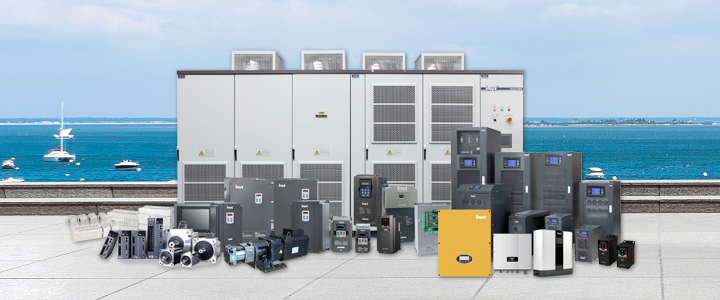
Additionally, this project highlights Invt's comprehensive solution capabilities. Beyond the folding line solution, Invt also offers solutions for paper-cutting machines, single-pack machines, mid-pack machines, rewinding and sealing lines, and other complete tissue machinery line solutions, as well as solutions for other industries. This provides customers with full-spectrum support, aiding enterprises in achieving high-quality development.



Our site uses cookies to provide you with a better onsite experience. By continuing to browse the site you are agreeing to our use of cookies in accordance with our Cookie Policy.














 Share
Share
 Facebook
 Twitter
 Google+
 LinkedIn
 Return list