Abstract: This paper presents the application of the INVT GD5000 Medium-voltage vector frequency inverter in mill press machinery at a sugar mill in Thailand. It expounds the feasibility and economic advantages of frequency inverter retrofitting on sugar mill crushers through three aspects: improvements in the sugar manufacturing process, increased yield, and actual energy savings.
Keywords: GD5000,sugar mill
1.Introduction
The sugarcane sugar production process generally comprises juice extraction, purification, evaporation, crystallization, molasses separation, and drying. The process is illustrated in the diagram below:
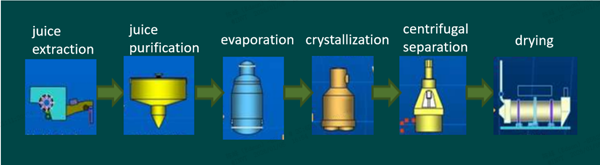
Figure 1. Sugarcane Sugar Production Process Diagram.
Juice extraction is a crucial stage in the process, and the crusher is the primary equipment for extracting cane juice via pressing. According to relevant data analysis, an increase of 1% in the crushing extraction rate results in an improvement of 0.88% to 0.92% in total sugar recovery. Modern juice extraction technology tends to optimize sugarcane pretreatment by employing pressure-fed rollers to enhance the crusher feed and enable pre-compression, thereby increasing the crusher’s production capacity.
However, during the crushing process, numerous factors influence the Crushing Extraction Rate, which can be summarized as follows:
1) Sugar loss in the bagasse.
During the crushing process, sugarcane is separated into cane juice and bagasse. Bagasse contains a high fiber content and expands upon exiting the crusher outlet. This expansion causes the bagasse to absorb a portion of the already extracted cane juice. Moreover, due to the crusher's operational efficiency, it is impossible to extract the entire sugar content from the sugarcane.
2) Degree of Crushing of the Sugarcane. Particularly in the pre-pressing stage, the degree of crushing and morphology of the sugarcane are essential prerequisites for ensuring the extraction efficiency of the entire pressing system. A proper degree of crushing facilitates the release of cane juice, thereby improving seepage performance.
3) Moisture content of the bagasse. Reducing the moisture content of the bagasse is vital to securing an improved extraction rate.
4) Uniformity of the cane bed thickness conveyed by the tearing machine. Uniform cane bed thickness is critical for enhancing the extraction rate. If the cane bed is too thick, pressing will be inadequate, resulting in bagasse wastage. If the cane bed is too thin and cannot be adequately dried, the moisture content in the bagasse will be excessively high, thereby adversely affecting the extraction rate.
5) Mechanical wear of the crushing rollers. During the later stage of the crushing season, as the crushing rollers experience increasingly severe wear, the gap between the rollers enlarges, leading to a reduction in the extraction rate.
In summary, when employing the pressure feeding roller method (also known as the toothed feeding roller), the feeding and pre-pressing processes have traditionally operated at a constant speed. Approximately 10% of the time, the thickness of the cane bed delivered from the shredding machine does not meet the required specifications, causing the average extraction rate of cane juice to drop below 95.4%. A lower extraction rate signifies greater loss of cane juice, thereby decreasing the overall yield. Furthermore, if the cane bed becomes excessively thick, the crusher rollers will jam completely, severely impacting production.
When adjusting the rotational speed of the pressing machine, if the cane layer thickness is insufficient, the speed of the pressing machine motor is reduced to allow the cane layer to achieve the normal thickness before pressing. This ensures more thorough pressing, with the average extraction rate increasing by more than 0.2%. Meanwhile, due to the reduced speed, the current decreases, thereby achieving energy savings.
2.Operating condition analysis
A sugar factory in Thailand is a leading enterprise in sugar processing. Through recent technological upgrades, its production capacity has reached 10,000 tons per day, with an annual output exceeding 1.6 million tons.
The simplified diagram of the on-site modification of a pressing production line is shown below:
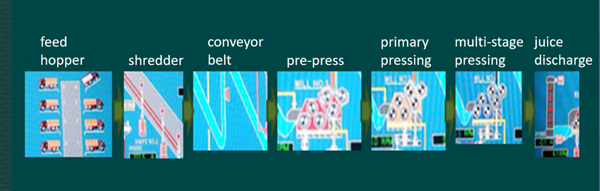
Figure 2: Simplified diagram of the sugar factory's pressing process
The section modified on-site is the pre-pressing unit. Before modification: The pre-pressing unit was driven by a fixed-frequency power source. Due to the fixed frequency and rotational speed, the sugar extraction rate was low, and the pressing unit was prone to jamming. Therefore, the on-site modification employed a variable frequency drive control method. Detailed parameters of the asynchronous motor are provided in the table below:
| Motor Model | YJTKK5001-6BM |
| Motor Power | 560KW |
| Rated Voltage | 3.3KV |
| Rated Current | 125A |
| Rated Speed | 750RPM |
| Power Factor | 0.87 |
| Load Type | Pressing machine |
Table 1: Motor parameter specifications for the pre-pressing machine
The on-site images are as follows:
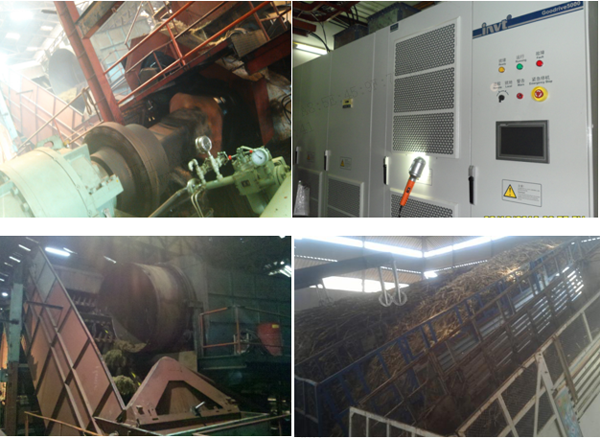
Figure 3: On-site load and equipment images.
3.System Selection and Configuration
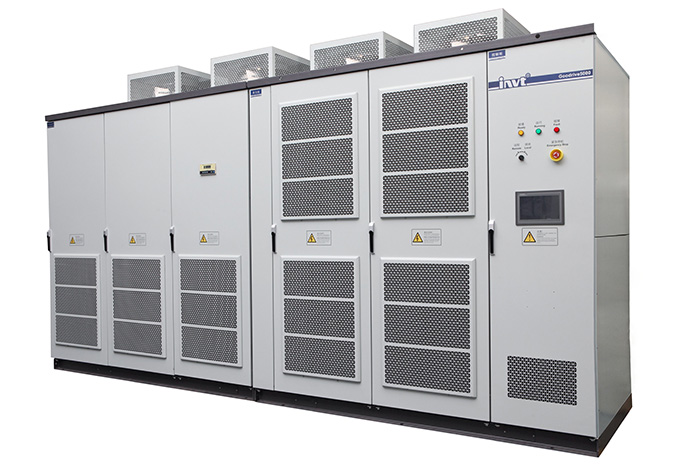
According to on-site requirements, the variable frequency drive system for the pre-pressing machine comprises a transformer cabinet, a power unit cabinet, and a control cabinet. The control cabinet panel is equipped with local/remote control buttons, an emergency stop button, and motor/variable frequency indicator lights.
The on-site system employs the GD5000 series medium-voltage variable frequency drive, manufactured by Shenzhen INVT Electric Co., Ltd. During operation, the speed setting of the variable frequency drive system is performed via a remote operator station for system status monitoring or speed setpoint adjustment of the pressing machine. The control room operator can conveniently regulate the pressing machine speed according to production requirements, thus providing substantial support for production efficiency.
4. Application and Advantages
Following the upgrade commissioning, the system exhibits the following advantages:
Soft start capability, with start time and method adjustable based on on-site operating conditions.
1)High power factor exceeding 0.95, eliminating the need for additional power factor correction devices and avoiding penalties related to reactive power.
2)No harmonic distortion imposed on the motor, effectively reducing motor heating.
3)Low torque pulsation, preventing resonance in the motor and associated mechanical equipment while also reducing wear on the transmission mechanism.
4)The output waveform is ideal, with distortion less than 4%.
5)It reduces occurrences of the pressing unit jamming due to excessively thick cane layers, thus preventing production line stoppages.
Simultaneously, economic benefits have improved:
1)Increased extraction rate: Calculations indicate that the average extraction rate can improve by over 0.2%. Currently, a conservative estimate of a 0.1% improvement is used. Based on an annual milling of 550,000 tons of sugar cane, 13.5% sugar content, and an 86% recovery rate, the additional sugar output per milling season is: 550,000 tons × 13.5% × 0.1% × 86% = 63.85 tons. At 2700 RMB/ton of sugar, this corresponds to: 63.85 tons × 2700 RMB/ton = 172,395 RMB, resulting in an additional revenue of 172,395 RMB per milling season for the company.
2)Significant electricity savings: The combined installed capacity of the five juice extractors is 2000 kW. Calculations indicate that post-retrofit, electricity consumption per ton of sugarcane decreased from 33.02 kWh to 31.22 kWh, achieving a normal and reasonable energy consumption level for sugar mills of this scale. Electricity consumption per ton of pressed sugarcane was reduced by 1.8 kWh. Based on an annual processing volume of 550,000 tons: Annual electricity savings = 550,000 tons × 1.8 kWh/ton = 990,000 kWh. At an electricity cost of 0.5 RMB/kWh: 800,000 kWh × 0.5 RMB/kWh = 400,000 RMB.
3)Reduction in maintenance-related downtime losses, resulting in significant savings in maintenance expenses.
5. Conclusion
For sugar mills employing the crushing method, retrofitting with AC variable frequency drives not only optimizes the process flow and improves production efficiency, but also enhances sucrose extraction rates and increases output. Simultaneously, it achieves substantial energy savings and reduces energy waste. The on-site operational performance has been favorable, garnering client recognition and approval.



Our site uses cookies to provide you with a better onsite experience. By continuing to browse the site you are agreeing to our use of cookies in accordance with our Cookie Policy.















 Share
Share
 Facebook
 Twitter
 Google+
 LinkedIn
 Return list