Against the backdrop of a global industrial sector accelerating its transformation towards green and efficient production models, the steel industry, as a crucial pillar of the national economy, is attracting particular attention for its efforts in energy conservation, emission reduction, and technological upgrading. In this process, every subtle technological innovation can become a significant driving force for promoting energy conservation, emission reduction, and improved production efficiency within the industry.
Customer requirements
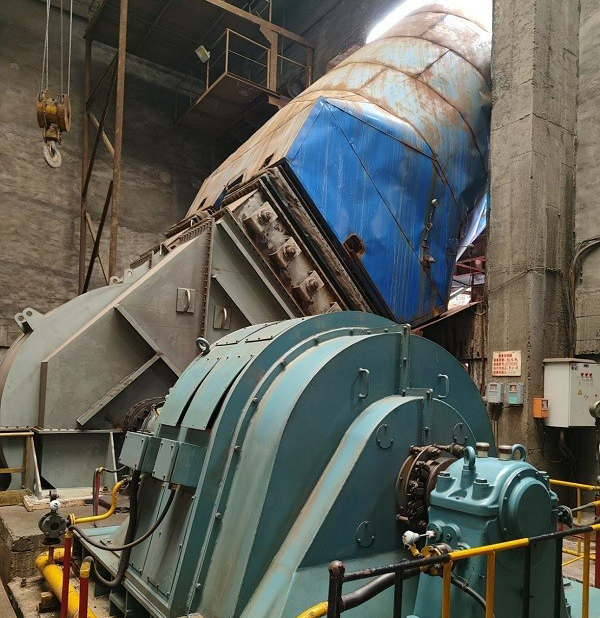
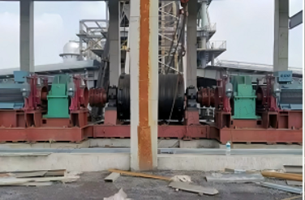
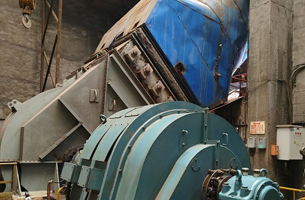
In traditional ironmaking plants, sintering exhaust fans can only be controlled by adjusting the size of the air valve when a small air volume is needed during production. This method is not only inefficient but also results in significant energy waste. To change this situation, a steel plant decided to introduce new technology and put forward the following requirements:
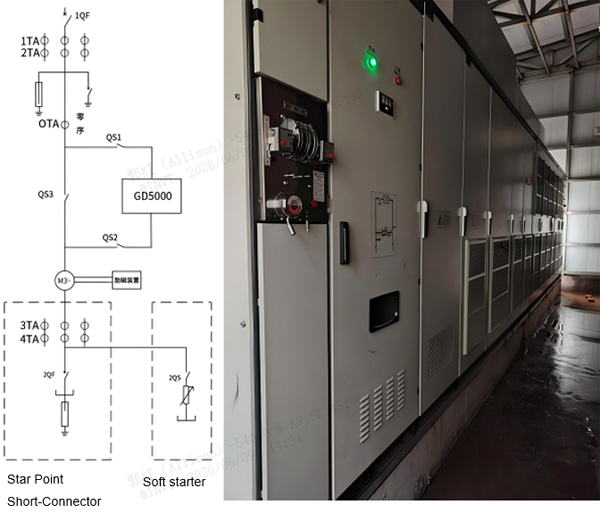
While retaining the original water resistance starter cabinet, a VFD is added, with both serving as backups for each other.
The newly built VFD room requires that the VFDs meet the requirements of both primary and secondary cables entering and exiting from the top.
VFDs need to adopt air-water cooling to improve heat dissipation efficiency, reduce energy consumption, and reduce maintenance costs.
The motor on site is an electrically excited synchronous motor, which requires an excitation device to provide excitation current.
INVT Solution
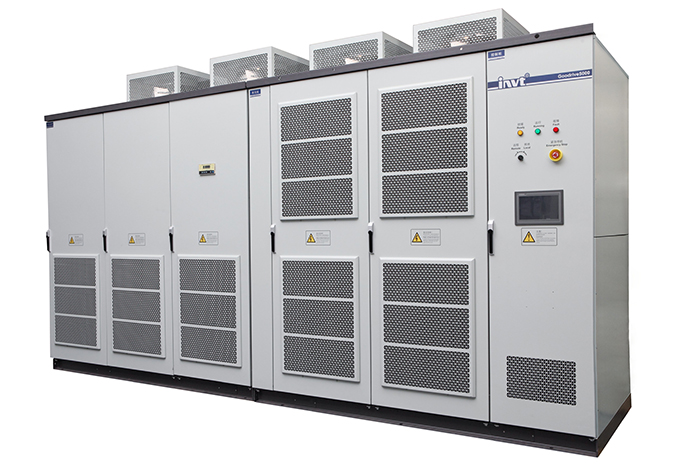
In response to the customer's needs, INVT tailored a GD5000 medium-voltage VFD solution for them. This solution retains the original water resistance starter cabinet and meets the requirements for both primary and secondary cables to enter and exit from the top, while simultaneously driving the electrically excited synchronous motor to operate stably.
Customer benefit
Significant energy savings: The VFD can flexibly and precisely adjust the motor speed according to the actual working requirements of the sintering exhaust fan, such as air volume and air pressure. When the exhaust fan does not need to operate at full load during the production process, reducing the speed can significantly reduce power consumption, achieving on-demand power supply and resulting in significant energy savings.
Performance improvement: The VFD adopts a soft-start method, which gradually increases the power supply frequency to slowly accelerate the motor, limiting the starting current to a very low level and smoothly starting the exhaust fan, greatly reducing the impact on the equipment and power grid during startup.
Speed regulation accuracy and flexibility: The speed of the exhaust fan motor can be adjusted within a wide frequency range (generally 0-50Hz or even wider), and the speed adjustment accuracy can reach 0.01Hz or even higher. It can precisely adjust the air volume and air pressure of the exhaust fan according to different sintering process stages (such as sintering ignition, different temperature stages during sintering, etc.), making the entire sintering process more stable and efficient.
Enhanced reliability: The VFD has a relatively compact structure, mainly composed of electronic components. Routine maintenance focuses more on cleaning and heat dissipation. The maintenance cycle is long and the maintenance difficulty is relatively low. The overall reliability of the equipment is higher, which can effectively reduce downtime caused by equipment failure and ensure the continuity of sintering production.
Automation and remote control: Equipped with comprehensive communication interfaces, it can be easily integrated into the factory's automated control system, enabling remote monitoring, remote speed adjustment, and other functions. This allows operators in the central control room to control the sintering exhaust fan based on the real-time status of the entire ironmaking production process. Water resistance cabinets, on the other hand, are relatively difficult to integrate into automated systems, often relying more on manual operation and simple local control.
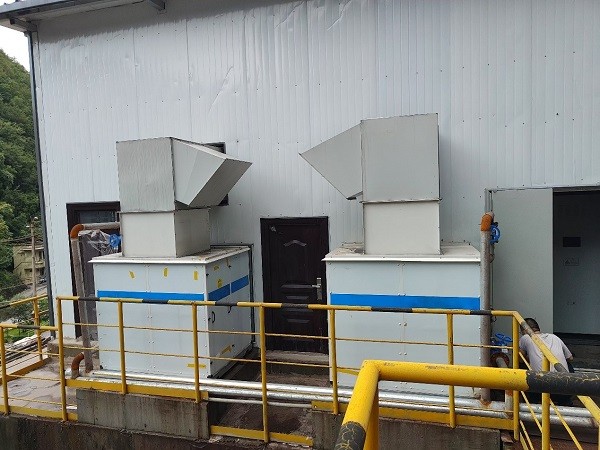
The successful application of INVT's GD5000 series medium-voltage VFD in sintering exhaust fans at ironmaking plants has not only brought significant energy savings and reduced consumption to steel mills but also improved equipment performance and production management.
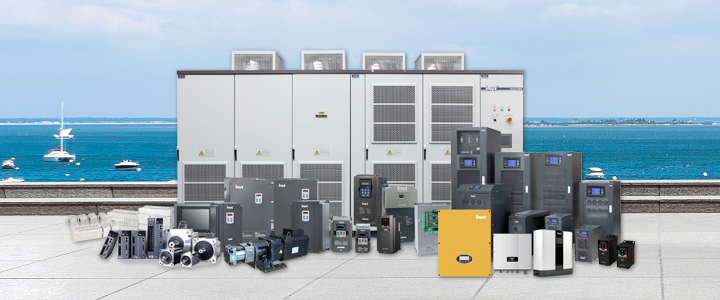
Currently, INVT provides complete system solutions for all aspects of the steel industry and has accumulated a wealth of successful case studies. Through its innovative technologies, INVT helps global steel companies significantly improve the energy efficiency of their load equipment, substantially reduce production and maintenance costs, and greatly enhance the degree of automation and production efficiency. In the future, INVT will continue to provide high-quality system solutions to steel companies, jointly promoting the continuous progress and development of the industry.



Our site uses cookies to provide you with a better onsite experience. By continuing to browse the site you are agreeing to our use of cookies in accordance with our Cookie Policy.










 Share
Share
 Facebook
 Twitter
 Google+
 LinkedIn
 Return list