Project Background
The data centers in Southeast Asia are currently experiencing rapid development: driven by the digital economy, the demand for AI, and local policy support. Local technology companies are actively participating in the investment, construction and renovation of data centers.
However, the old data centers encounter numerous problems, mainly manifested in the following aspects:
1.The infrastructure is aging and lacks reliability and security.
* High risk of hardware failure
Server, storage devices, network switches and other hardware equipment are in long-term use, their performance declines rapidly, the failure rate increases, and it is prone to causing business disruptions. For instance, an old UPS (uninterruptible power supply) may fail to cope with sudden power outages due to battery aging, thereby increasing the risk of data loss.
* Inefficiency of power and cooling systems
The early-designed power supply architecture (such as single power supply, low redundancy configuration) is unable to meet the high power requirements of modern IT equipment. Moreover, the cooling system (such as traditional data center air conditioners) cannot accommodate the heat dissipation needs of high-density servers, resulting in local overheating and potentially causing equipment failures.
2. High energy consumption and a sharp increase in operating costs
* The PUE value remains high
The power conversion efficiency of old data centers is low, such as traditional transformers and inefficient UPS, and the energy consumption of the cooling system accounts for a high proportion, possibly exceeding 40% of the total energy consumption, resulting in electricity costs becoming a heavy burden.
* Maintenance costs increase
The procurement of spare parts for old equipment becomes more difficult, the frequency of maintenance rises, and the labor and material costs are significantly higher than those of newly built data centers.
INVT Solution
To reduce energy consumption and improve efficiency, the main focus lies in the power distribution system and the cooling system. For this data center project, multiple sets of INVT modular UPS and 12V-250AH VRLA batteries are adopted.
1. The modular UPS achieves power supply through the parallel operation of multiple independent modules.
Compared with the traditional tower-type UPS, its core advantages lie in the following aspects:
* High reliability and redundancy guarantee
Support N+X redundant design, such as N+1, N+2. In the event of a failure of a single power module, other modules can automatically take on the load, preventing system shutdown and significantly reducing the risk of single-point failure. For example, a certain data center adopts a 4+1 redundant configuration. Even if one module fails, the remaining 4 modules can still meet the full-load power supply requirements.
The modules operate independently of each other, without interfering with one another, and have the feature of hot-swapping. When a faulty module needs to be replaced, there is no need to power off the system, ensuring continuous power supply for the load. The MTBF (Mean Time Between Failures) is significantly higher than traditional UPS.
* Flexible expansion and on-demand deployment
Initially, a small number of modules can be configured according to the load requirements. Later, as the business grows, the number of modules can be gradually increased, for example, from 20kVA to 100kVA. This avoids excessive investment in a single step and reduces the initial cost.
* Easy maintenance and low operation costs
The modules have a high degree of standardization, making fault diagnosis simple. Replacement only requires plugging and unplugging operations, without the need for complex professional debugging. This shortens the maintenance time, traditional UPS may take several hours, while modular UPS only takes 10-30 minutes. Daily maintenance can be carried out on individual modules without affecting the overall system operation, reducing business losses caused by downtime maintenance.
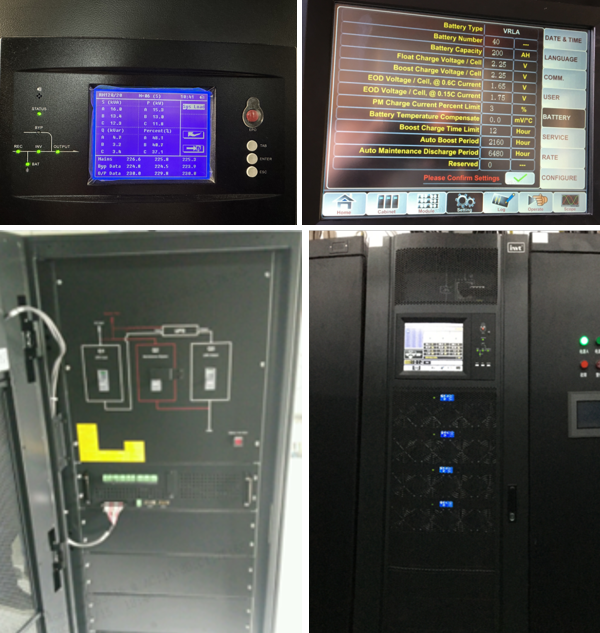
2. Valve-regulated Lead-Acid Battery (VRLA) achieves sealed and maintenance-free performance through valve-regulation design. It is widely used in backup power supply applications and has the following advantages
* Maintenance-free and easy to operate
The battery is designed with a low-liquid content system, ensuring no acid leakage. There is no need to add electrolyte regularly or adjust the liquid level, thereby reducing the workload and labor costs during operation.
* Safety and environmental adaptability
Equipped with a safety valve, it will automatically release air when the internal pressure is too high, preventing the battery from swelling or exploding; after the pressure returns to normal, it will automatically close to prevent the evaporation of electrolyte and the entry of external gases, thereby reducing acid mist pollution.
* Compatibility and Easy Replacement
The charging and discharging characteristics are consistent with those of traditional lead-acid batteries. No special charger is required. It can directly be adapted to the charging system of UPS and other equipment. When replacing the old open-type lead-acid batteries, there is no need to modify the circuit. It has strong compatibility.

Customer Benefits
* Potential business opportunity
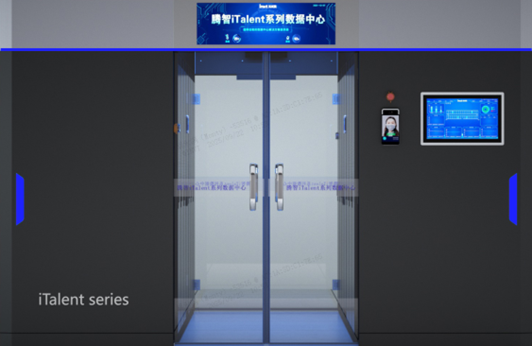
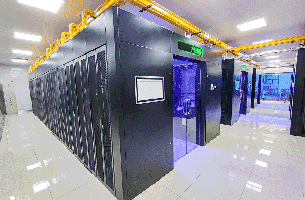
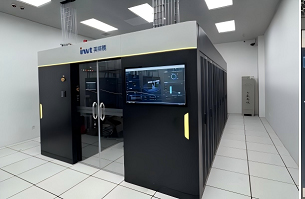
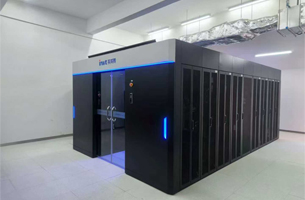
Previously, the customer only used our UPS and battery products. The three water-cooled air conditioners of 30T each for the refrigeration system , and the traditional mode was used for the server room. We suggest that the customer upgrade and replace them with our iTalent products for the micro-module data center in the future.
* Quick and flexible deployment
The components of the modular data center are mostly prefabricated in the factory, and only simple assembly and debugging are required on-site, which can shorten the deployment cycle to just a few weeks. At the same time, it adopts a modular design, allowing for flexible configuration of the system architecture according to business needs, and is also easy to expand in the future, meeting the demand for rapid increase of business in data centers and avoiding the waste of fixed assets.
* High reliability
By adopting modular and standardized design, it can provide power supply and cooling solutions such as N+1, N+X, and 2N according to customer requirements. For example, UPS can reliably achieve N+1 redundancy, and the strong and weak electrical lines are separated to reduce electromagnetic interference. It also has a manual maintenance bypass to reduce the risk of misoperation and ensure the stable operation of the system.
* Green and energy-saving
It can achieve power supply and cooling for IT equipment on demand, making the capacity of the power supply and cooling systems more matched with the load requirements, improving work efficiency and reducing over-configuration. At the same time, it adopts cold channel closed isolation technology to avoid the thermal island effect and heat loss caused by air flow interference. Combined with row-level air conditioning and other near-hot-source cooling designs, it can improve cooling efficiency and greatly save electricity.
* Intelligent management
By using real-time monitoring of the internal environment of micro-modules, power equipment, and the collaborative work of IT equipment and infrastructure, it realizes refined operation and maintenance of the power environment + IT equipment. The intelligent management system can also provide a visual experience, helping customers achieve multi-level and refined energy consumption management of the data center.
* Cost savings
The standardized components and prefabricated production mode have reduced design and construction costs. At the same time, due to its significant energy-saving effect, it can reduce long-term power consumption costs.
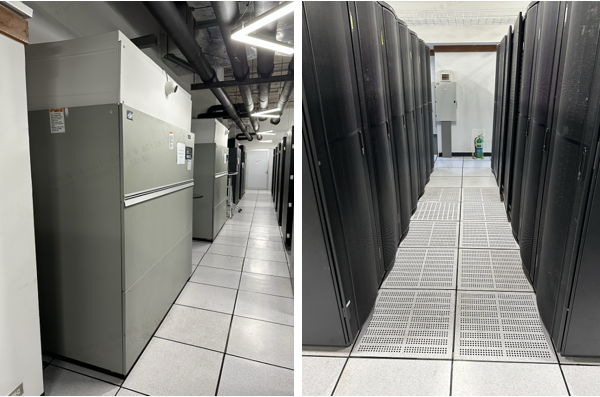
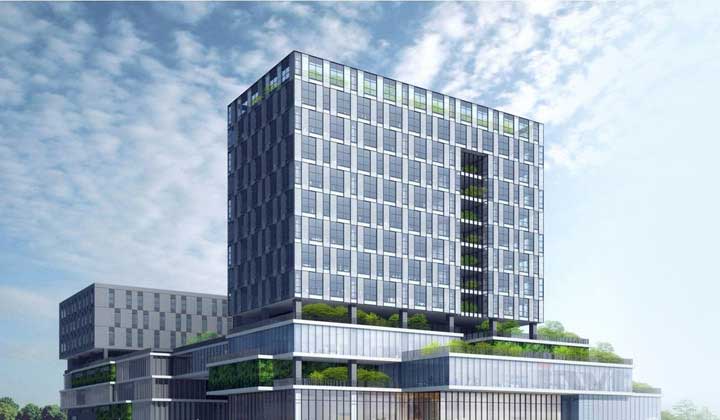
The effect picture after upgrading:



Our site uses cookies to provide you with a better onsite experience. By continuing to browse the site you are agreeing to our use of cookies in accordance with our Cookie Policy.










 Share
Share
 Facebook
 Twitter
 Google+
 LinkedIn
 Return list