Abstract: As demand for efficient and reliable power in data centers continues to rise, traditional facilities are increasingly challenged by limited space, lengthy construction cycles, and low system integration. The modular containerized power solution is designed to overcome these pain points. With rapid deployment, flexible scalability, and superior energy efficiency, it has become the preferred infrastructure for 5G, IoT, and emergency applications. By integrating precision cooling, UPS, and power distribution systems, this solution enables customers to build high-performance data centers even in space-constrained environments—paving the way for a smarter, more efficient, and sustainable digital future.
Key words: Single-row data center, precision air conditioner.
1. Project Background
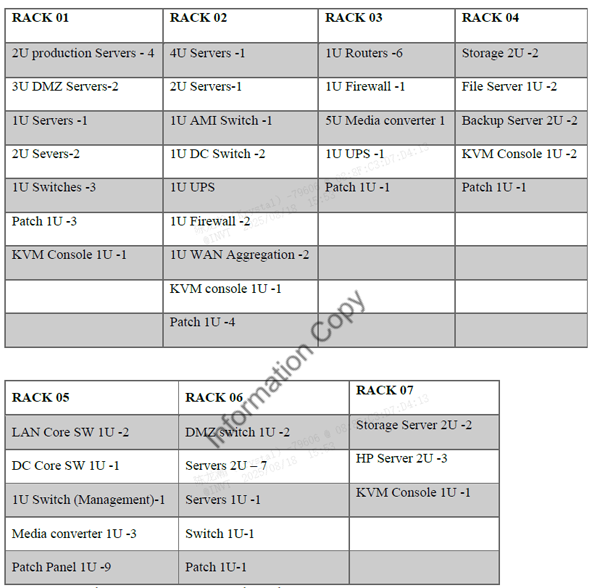
The local Power Bureau in Sri Lanka operated a legacy data center housed in a constrained server room measuring 4.6m × 7.8m. The existing facility utilized a traditional design with seven server racks arranged in two rows. This setup reflected typical challenges of older infrastructures: it suffered from low cooling efficiency, lacked a fire protection system, was characterized by high energy consumption, and offered poor scalability. These limitations were becoming increasingly critical, as the bureau's growing digital operational demands and future expansion plans were severely hampered by the outdated and inefficient data center environment. The need for a modernization project was evident to ensure the facility could reliably support current and future mission-critical services.
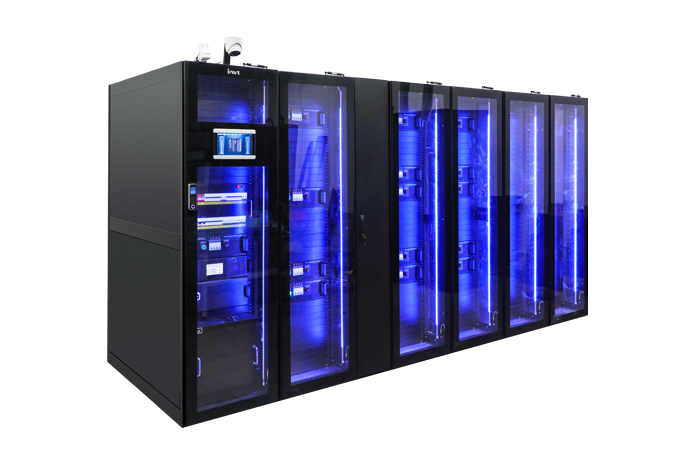
To address these issues, INVT recommended the iWit single-row data center solution, featuring six cabinets (one host cabinet and five IT cabinets). The configuration includes two 25 kW in-row air conditioners in N+1 redundancy, a 45 kVA modular UPS with three 15 kVA power modules, and 15 minutes of battery backup, ensuring both efficiency and high reliability. This solution fully met the customer’s requirements, transforming the legacy data center into a modern, modular facility with improved resilience and scalability.
2. Customer Pain Points
Severely Limited Space: The original server room was only 4.6m × 7.8m. The traditional double-row layout occupied excessive floor space, making it difficult to accommodate future expansion and new IT equipment within the constrained area.
Low Cooling Efficiency: The original cooling system was inefficient, struggling to handle the heat dissipation demands of high-density server racks. This created risks of localized hot spots, potentially compromising IT equipment lifespan and stability.
Lack of System Redundancy: The original power and cooling systems lacked redundancy configurations, posing a high risk of single points of failure. This could not meet the power bureau's high-reliability requirements for uninterrupted business continuity.
High Energy Consumption: The traditional design led to excessive energy usage, resulting in high operational costs and a higher Power Usage Effectiveness (PUE), failing to meet modern energy efficiency standards.
Poor Scalability and Rigid Infrastructure: The legacy infrastructure was rigid and difficult to scale flexibly according to growing digital demands, hindering the bureau's ability to adapt quickly to new technological needs. The physical layout also made maintenance complex and time-consuming.
3. INVT Solution
INVT recommended and implemented the iWit series single-row modular data center solution:
Space Optimization: A single-row, 6-cabinet layout was adopted, saving ≥30% of floor space compared to the traditional double-row design.
High-Reliability Design:
Cooling: Equipped with two 25 kW in-row precision air conditioners in an N+1 redundant configuration.
Power: Utilized a 45 kVA modular UPS system (comprising 3 x 15 kVA power modules) with N+1 redundancy. Hot-swappable battery cabinets were deployed to provide 60 minutes of backup time for a 15 kW IT load, enhancing system stability and maintainability.
Rapid Deployment: The solution was highly pre-integrated in the factory, enabling on-site deployment and commissioning to be completed in ≤4 hours.
Scalability: The modular architecture of both the UPS and the overall data center allows for flexible future expansion based on demand.
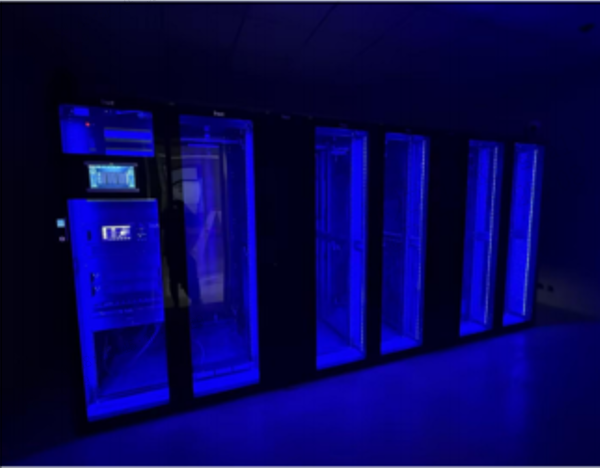
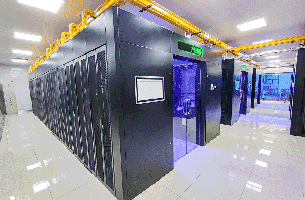
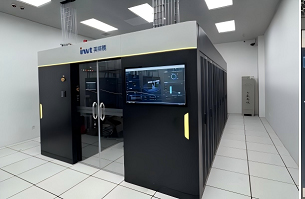
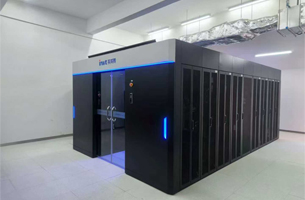
Final effect drawing
Compare
Single-row air-cooled micro-module data centers outperform single-cabinet solutions by supporting higher density (up to 10–15 kW per cabinet) and greater scalability (2–15 cabinets per module), overcoming the rigid capacity ceiling of single racks (≤5–8 kW). Compared with double-row layouts, the single-aisle design saves ≥30% floor space by eliminating redundant corridors and cooling pathways, making it ideal for space-constrained urban sites or retrofit projects.
Deployment is accelerated to ≤4 hours thanks to 90% factory-preintegrated subsystems, while double-row solutions still require on-site inter-row coordination. Leveraging in-row precision air cooling with EC fan and inverter Compressor technology, these modules achieve energy efficiency with PUE as low as 1.35–1.6, significantly outperforming single-cabinet units (>1.8) and comparable to double-row configurations (≈1.4).
Each module operates autonomously with N+1 cooling and power redundancy, ensuring fault isolation and system resilience—advantages not possible in shared single-cabinet systems or interdependent double-row layouts. Proven in banking, healthcare, telecom, and edge computing scenarios, this balance of density, speed, and self-contained reliability makes single-row air-cooled micro-modules the optimal choice for 10–75 kW deployments.
4. System configuration
Original data center layout
INVT data center layout
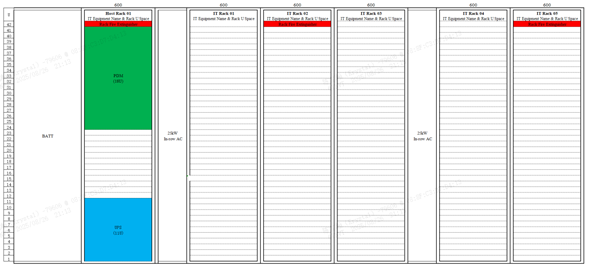
Compared with the original solution, INVT occupies less space, has higher power density and is easier to maintain.
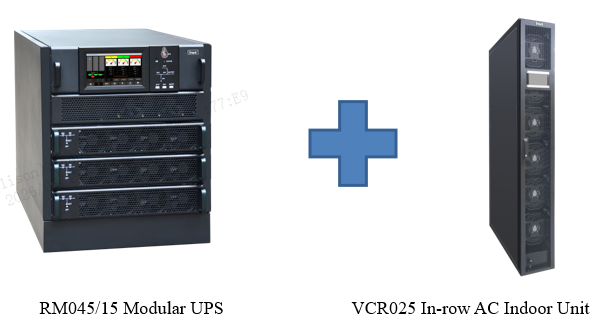
The modular and rack mount UPS(RM045/15X, 45kVA UPS) and in-row air conditioner(VCR025, 25kW AC) are used, so that the power supply system and the cooling system are both in the cabinet, the cold channel is closed, and the whole system is very efficient.
Configuration Strategy: Since the customer required the entire system to support a 15kW IT load and N+1 redundancy, we chose a 45kVA UPS with the highest UPS efficiency (50%-75%) for redundancy. For air conditioning, we could use two non-standard 15kW AC units. However, considering that if one unit fails, the other unit might need to operate at full load, we increased the margin and selected a 25kW AC unit.
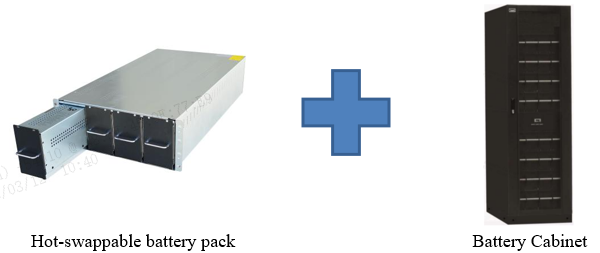
The customer requires that hot-swappable battery packs must be used and that a 15kW IT load needs to be backed up for 60 minutes.
Configuration Strategy: Calculations revealed that we would need to connect at least eight 480V, 9AH lead-acid battery packs to meet the requirements. We ultimately decided to use a hot-swappable battery cabinet. For system stability, INVT UPS doesn't recommend connecting more than four battery packs to a single UPS (due to the risk of battery charge and discharge loops). The hot-swappable battery cabinet's overall design significantly reduces this risk. Furthermore, compared to rack-mounted installation, cabinet installation is more compatible with the iWit solution and offers a more aesthetically pleasing design.
5. Customer Benefits
Significant Space Savings: The single-row design freed up significant floor space within the limited server room, allowing for better utilization of the area.
Enhanced Reliability and Uptime: N+1 redundancy for both power and cooling ensured stable IT operations and uninterrupted business continuity, minimizing downtime risks and meeting high-reliability standards.
Rapid Deployment & Reduced Installation Time: The pre-integrated, plug-and-play approach drastically reduced the construction and commissioning timeline, minimizing disruption to operations.
Improved Energy Efficiency and Lower Operational Costs: The solution achieved a lower PUE through efficient in-row cooling and high-efficiency UPS systems, reducing operational costs.
Future-Proof Scalability: The modular design allows the data center to grow seamlessly alongside the customer's evolving needs, protecting the investment.
Reduced Total Cost of Ownership (TCO): The combination of space savings, energy efficiency, rapid deployment, and high reliability contributed to a dramatic reduction in both operational risk and the Total Cost of Ownership.
This upgrade successfully transformed the legacy data center into a modern, efficient, scalable, and highly reliable modular facility, empowering the customer's digital infrastructure for future demands.



Our site uses cookies to provide you with a better onsite experience. By continuing to browse the site you are agreeing to our use of cookies in accordance with our Cookie Policy.













 Share
Share
 Facebook
 Twitter
 Google+
 LinkedIn
 Return list