1. Project Background
Global shipping faces an urgent need to reduce carbon emissions, and pressure to address port and waterway pollution is growing. Strict emissions regulations from the International Maritime Organization (IMO) and the “dual carbon” goals are driving the green transformation of ships. Thanks to breakthroughs in lithium-ion battery technology, cost reductions, and the maturation of power systems, all-electric vessels are increasingly advantageous for fixed routes (such as ferries, inland waterway/port vessels): they operate with zero emissions, low noise levels, and low operational costs. Developing new energy all-electric vessels is a strategic choice to break through environmental bottlenecks and seize the initiative in green shipping.
2. Customer Requirements
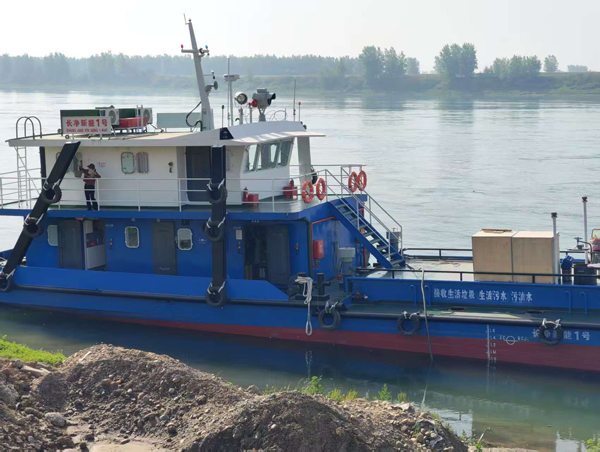
A company in Wuhan has been engaged in the design and research and development of marine drive products and systems, and marine control and charging systems are part of its electrical equipment. Previously, ship propulsion systems primarily relied on generators, with diesel generator sets providing all the electrical power for the vessel. However, traditional generator sets suffer from low efficiency (full-load efficiency typically below 85%), severe harmonic pollution (THDi > 30%), and low power factor (approximately 0.7). These issues not only result in energy waste but also interfere with the vessel's precision electronic equipment, and are at odds with environmental protection goals. Currently, the following major challenges exist:
* Limited grid capacity: Ship power plants have limited power capacity, so charging equipment must be efficient and low-interference.
* Frequent voltage fluctuations: Changes in generator load cause significant fluctuations in busbar voltage.
* Space and reliability: Equipment must be compact in structure, adaptable to the humid and vibrating marine environment, and easy to maintain.
3. INVT Solution
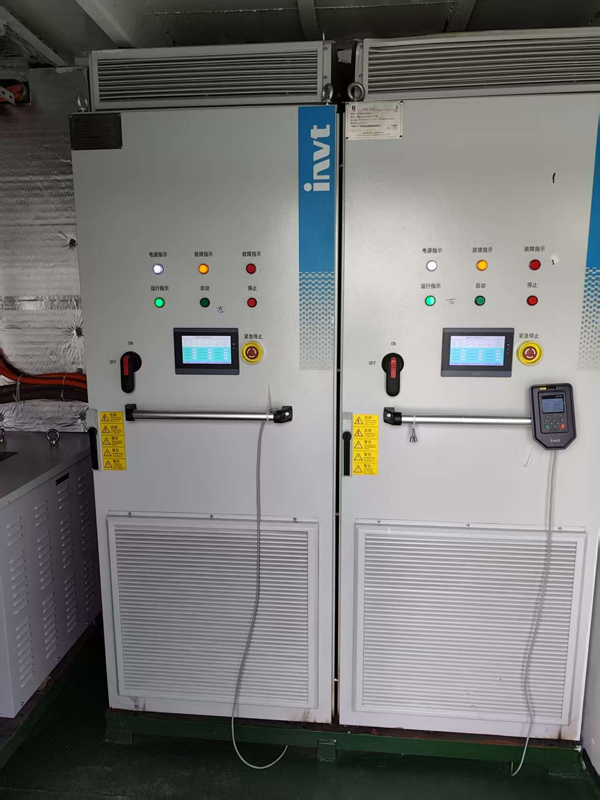
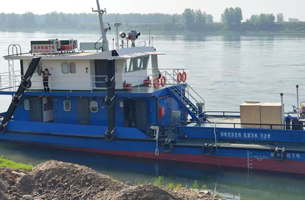
In order to meet the requirements of green, low-carbon, low-noise and low operating cost for ships, the power design of the hull adopts pure electric drive, that is, a large-capacity battery is used as the power source. After the battery is depleted, a charger is used to recharge the battery for recycling and energy conservation and environmental protection, thereby improving the overall equipment utilization efficiency. The charging system is composed of main equipment such as PLC, touch screen, and charger. The charger adopts the INVT GD880 series VFD. This product is designed in a modular manner based on the DFX concept, uses advanced control algorithms, has excellent speed and torque control performance, high reliability, high energy density, convenient installation and debugging, and comprehensive protection, etc. The characteristics of the entire charging system product are as follows:
1 The GD880-96 series active rectifier cabinet is used as the core unit of the charger, employing advanced PWM rectification technology and an active front-end (AFE) design. This results in high input power factor and low harmonic distortion.
2. The system is equipped with a PLC, featuring built-in charging logic and advanced algorithms to enable automatic switching between multiple modes such as constant current, constant voltage, and constant power, precisely matching the charging curve of lithium-ion batteries; it also includes various charging protection logic to align with BMS charging conditions, maximizing equipment safety.
3. It is equipped with an HMI touchscreen for human-machine interaction, which can display the BMS status and various operational parameters of the charging machine in real time.
4. The charging machine can set the charging power according to the grid capacity to match the charging requirements under different operating conditions.
5. The charging machine adopts long-life component selection and rapid fault recovery design to ensure efficient process control operation;
6. The charging machine features ergonomic design for convenient and quick installation and maintenance.
7. Certified by CCS.
4. Customer Value
INVT VFD empowers marine charging machines with core green energy-saving advantages:
1. Ultra-high efficiency, directly addressing energy consumption pain points:
1) PWM rectification technology increases the system's full load efficiency to over 95%, saving 10%-20% energy compared to traditional solutions.
2) Significantly reduces fuel consumption and carbon emissions of diesel generator sets, saving tens of thousands of yuan in fuel costs per ship per year.
2. Excellent power quality, purification of ship power grids:
1) Ultra-high input power factor (>0.98): Virtually eliminates reactive power losses during charging, increasing the effective capacity of the power grid.
2) Extremely low input current harmonic distortion rate (THDi < 5%): Far exceeds the requirements of standards such as IEEE 519, eliminating the risk of harmonic interference with sensitive equipment such as navigation and communication systems, and improving the stability and reliability of the ship's electrical systems.
3. Stable and reliable, fearless in complex working conditions:
1) Wide voltage input design (-15% to +10%) to cope with fluctuations in the ship's power grid.
2) Industrial-grade protection (IP20) and reinforced anti-seismic design to adapt to various adverse environments on rivers.
3) Intelligent charging control and comprehensive protection mechanisms (overvoltage, undervoltage, overcurrent, overheating, etc.) ensure long-term stable operation of the system.
4. Intelligent control, convenient and efficient:
1) Supports MODBUS communication, easily connects to the ship's energy management system (EMS), and enables remote monitoring, parameter setting, and fault diagnosis.
2) User-friendly human-machine interface (HMI) simplifies local operation and maintenance.
5. On-site Application Results
Achieving both economic and environmental benefits
1. Significant energy savings: The comprehensive energy consumption of the charging system is reduced, significantly lowering the operating costs of pure electric ships.
2. Grid purification: During charging, the THDi input is reduced to below 3%, significantly improving the quality of the ship's grid and reducing equipment failure rates.
3. Emissions reduction and efficiency improvement: Reduced diesel consumption directly lowers CO2, NOx, and other emissions, helping ports achieve their green goals.
4. Stable and Reliable: The system operates smoothly with reduced maintenance requirements, ensuring continuous vessel operations.
6. Conclusion
With its efficient PWM rectification technology, excellent power quality management capabilities, and outstanding industrial reliability, INVT's charging system has been successfully applied in the field of marine chargers, providing ships with efficient, clean, and intelligent charging solutions. The application of INVT chargers on this pure electric ship fully verifies that INVT technology is the ideal choice for achieving “green charging” for ships, reducing operating costs, and improving system reliability, providing strong technical support for the low-carbon transformation of the shipping industry. INVT's charging system is driving the evolution of ship propulsion toward a greener, more sustainable future.



Our site uses cookies to provide you with a better onsite experience. By continuing to browse the site you are agreeing to our use of cookies in accordance with our Cookie Policy.















 Share
Share
 Facebook
 Twitter
 Google+
 LinkedIn
 Return list